#oneaday 8: Robbing Peter, lending to Paul?

So all the tough talk about ‘us all being in this together ‘ (sic) (for those non residents of the UK, this was the phrase introduced by David Cameron, now Prime Minister of the UK at the Conservative party conference in October 2009 and has been the rallying call in these tough times) has proved to be a little wide of the mark. As purchase tax, or value added tax (VAT) as it was rebranded some years back rose 14% to 20% on the 4th of January, and thousands of public and private jobs are slashed,  as deep and rapid cuts to the welfare state and the education system,  the majority of folk in the UK are now getting used to a time of austerity. And you know what, we have no choice. The economy of the UK has taken a major battering, why, well in truth there are so many factors it would be a long essay and stuff that I simply don’t understand. But basically we spent more than we earned and we have to do our financial porridge for some years.

One factor that does stand out amongst all the others however, is the fact that some of our banks became insolvent in 2008. Instead of ‘the bank calling the debt in’ as normally happens when businesses and institutions fail, this time the banks carried the debts and could not meet their commitments. There was no one bank to call all the other banks in so to speak. They really were ‘all in it together’. The decision was taken, we are told, in the national interest, by Prime Minster Gordon Brown to bail the banks out. Amazingly no one actually seems to know to what extent. Namely we don’t know the final number. Some sources quote upwards of £1 Trillion. in the case of RBS (Royal Bank of Scotland) we are told that the citizens of the UK now own 83% of the shares. In return for these share the nation poured £45Billion in cash, insured £280Billion of risky loans and set aside a further £8Billion in case things get really bad. So you’d have thought as majority shareholders in this company, we i.e our Government would have had a say in how that business should be run, in the national interest and all that.

But the Government insisted earlier today (when I wrote this anyway) it would not intervene to stop Royal Bank of Scotland’s chief executive, Stephen Hester, earning up to £9Million for last year’s work. Furthermore it will not seek to cap the bonus pool of more than £1Billion that the bank intends to pay it’s high earners. A spokesman for David Cameron said: “We’ve made a broad statement which is about the need to see some restraint and some responsibility from the banks, but we are not going to set bonus pools for individual banks.”

We know the sketch here. Money talks blah, blah. But for all the recent fighting political talk – see below – of those who govern us, those that our pickled voting system has thrust upon us, right or wrong, is always the same. It is just talk and talk, unlike property is cheap.  Indeed the extra tax rate/levy on bonuses from last year has been wiped out,  replaced by a lesser yielding tax on the banks’ balance sheets.

So if you are young and  live in London, or are trying to buy a house in London, or indeed in the countryside close to London – aka The Stock Broker Belt as it used to be called when VAT was purchase tax, one of the consequences of this indecent and bloated excess is that property prices will rise again, thus putting property even further off the radar of those starting out in their working life, those trying to bring up a family. The very same people, many of them pay as you earn (PAYE) tax payers (you know the ones who pay the correct amount of tax as they do not have access to fancy schemes for tax optimisation) are royally being shafted.

The youth should always be at the centre of any society’s future, yet they find themselves over taxed, if they are lucky enough to have a job, under served and utterly betrayed. And the bank band played on. Pfffff. I am not given to cheap prejudice, but I can tell you now, I have complete and utter contempt for these people.

So there you go and to keep it interesting, I have a meeting with our bank manager planned for next week to discuss our  ‘facility ‘for 2011. The name of that bank? I will give you 3 guesses. You should get it right first time. Wish me luck.

Footnote what our leaders said when in Government (courtesy of The Independent today)

‘It is wholly untenable to have millions of people making sacrifices in their living standards only to see the banks getting away scot-free – the banks should not be under any illusion: this Government cannot stand idly by.’ – NICK CLEGG, Deputy Prime Minister17 NOVEMBER 2010

‘I make no apology for attacking spivs and gamblers who did more harm to the British economy than Bob Crow [the RMT union leader] could achieve in his wildest Trotskyite fantasies, while paying themselves outrageous bonuses underwritten by the taxpayer.’ – VINCE CABLE, 22 SEPTEMBER 2010

‘Every decision the banks make like that [paying large bonuses] makes it more difficult to keep a tax regime that they might favour.’ DAVID CAMERON, Prime Minister 17 DECEMBER 2010

‘We will not allow money to flow unimpeded out of those banks into huge bonuses, if that means money is not flowing out in credit to the small businesses who did nothing to cause this crash and suffered most in it.’ – GEORGE OSBORNE, Chancellor of the Exchequer 4 OCTOBER 2010
2 Comments

Filed under World Cup 2010

#oneaday 7: Who’s the Twit?

Skimming through The Guardian (a UK newspaper for those non UK residents reading this)  online tonight, I couldn’t fail to notice that there seems to be a growing amount of heat both official and otherwise for celebrities who are being paid to push products, ie sponsored Tweets (see Twitter endorsements face OFT clampdown http://www.guardian.co.uk/technology/2011/jan/09/oft-clampdown-covert-twitter-endorsements) .

 There are a few issues here, connected of course, but as usual associated with freedom and choice.

Firstly, the Office of Fair Trading (OFT) has a point, sort of. They maintain that PR company Handpicked Media who run a commercial blogging network,  must state when promotional comments have been paid for. I get that, again sort of. But surely this approach does not credit the readers or followers any intelligence? I may only speak for myself, but one of the many really amazing things about the internet is that it kind of works things out, wisdom of the crowds or otherwise. Over in old fashioned TV ad land, or even older fashioned print ad ville, do we really need to know that the celebrities, famous people, recognised people, personal brand pushers or whatever we call them, are paid for endorsing and pushing products? Of course they are, it is a given.  Surely the same is true now that  the Ad and PR people have taken their place within Twitter and Facebook and for that matter Amazon? I mean hearing a celeb Tweeting endlessly about a product, in a series of 140 character tomes, is both transparent and ultimately boring, unless it is genuine. The power is with all of us, not some of them, and by them I mean  I mean the marketeers and their mules.

Secondly, the OFT are only following what their American cousins at the US Federal Trade Commission (USFTC)  insist on. The USFTC want transparency in this area and  insist on such Tweets carrying ‘ad’ or ‘spon’. I have no idea how this is or will be policed, I am sure it will be a mix of a tech solution and some ordinary people doing some ad hoc, sorry intelligence led,  snooping. Anyway, who cares as long as it does not effect out freedoms and ability to chose. Censorship should always be questioned, especially on the internet.

According to The Guardian article, “Celebrities can be great influencers, whether they’re on TV or tweeting,” Arnie Gullov-Singh, chief executive officer of Ad.ly, which pairs celebrities and companies, told Business Week in a recent interview. Reality TV star Kim Kardashian, who has more than 5.6 million followers, can collect up to $10,000 for tweeting, Gullov-Singh added. “Her price keeps going up. The most effective ones can get six figures a year, and in some cases six figures a quarter.”

Launched in 2009, Ad.ly uses more than 5,000 celebrities and experts to promote products such as Coke, Toyota and Microsoft in the US. It now plans to launch the service in Britain.“A year ago, celebrities were wary about their reputation, about selling out, but when they saw how easy it was to earn up to $5,000 a tweet, they flocked on board,” said Gullov-Singh.

Thus finally, it should not really be a  surprise to read Mr Gullov-Singh’s comment about some celebrities, after all fear and greed are all part of the human condition and let’s face it how many of us would refuse to take a fee to endorse something? Even if we were taking the moral high ground and wanted to preserve a reputation (darling) and push a product or service  that we may even use, love and could not bear to be without? Tough call, moral dilemma ahead! Therefore we should all be free to make our own decisions. If we are lucky enough to be offered money for Tweets, then we should weigh up the deal and decide for ourselves. If we value our judgement and reputation, we should tell the truth, however hard that can be sometimes, especially when filthy lucre is around. Equally, if we want to follow what celebrities tell us, that should also be our choice and one that should not leave us as individuals open to mockery. Ultimately crap products or services will get found out and the internet will spread that news quicker than a paid for Tweet or Facebook post.

The internet gave us many things, but for me, it gave freedom of choice.


Leave a comment

Filed under World Cup 2010

#oneaday 6: Viking, Forties, Dogger Bank

What do the numers 00.48, 05.20, 17.54 have in common? No they are not the runs scored by an out of form Michael Clarke in the last 3 Tests, but the times that the BBC broadcasts the shipping forecasts on Radio 4 Long Wave. These times are relied on by mariners around the UK waters and are broadcast like clockwork, literally. So at 00.48 on Thursday night, the BBC broke off Test Match Special just as the 91st and last Australian wicket in the Ashes series fell and England duly won the series and therefore The Ashes,  3-1.  Typically British, typically BBC. Cricket is only a game afterall and the shipping forecast is a matter of life and death.

Not that you would know this if you were a citizen of Australia, where clearly any sport, national or otherwise is a matter of life and death. Often famed for their ‘winning’ attitude, it is obvious that the post Warne/McGrath/Gilchrist team are having to get used to losing, indeed this concepts seems to be spreading like a pandemic through the nation’s psyche. But losing is good for the soul. It brings balance, perspective, hurt, disappointment  and crucially ensures that arrogance is reigned in. No one likes losing in general, as a race we are all hard wired to like to win, whatever that actually means. Sport is a crude and effective way of defining the black and white, win or lose, mentality that most people want or in some cases need to experience. It is both primeval and compelling, and in the case of the great game of Test Match cricket, brilliantly complex, subtle, exaggerated and of course tough. In short, Test Match cricket  is like a  ‘core’ computer game. Not easy to pick up and play or understand, requiring patience, practice, knowledge, experience and an ability to appreciate the finest nuances that may leave the less experienced player or viewer cold. It has a language and symbolism of its own and does not pander to modernity.  It is certainly not a casual snacking experience, that was the realm of the one day game, although that is now deeemed to be just too long for a game to last. In recent years we have seen unprecedented  growth of the vulgar and indecently short Twenty Twenty cricket, the Nintendo Wii or Kinect of cricket if you will. Bright colours, guaranteed results, club nicknames,  loads of gamification style stats pervade and for those of us who prefer the tradition of the Test Match game, this really is cricket lite.

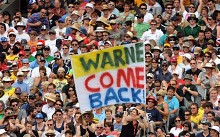
Aussie fans going retro

Thus for England, for so many years the losers in all forms of cricket, to have won the Ashes series in Australia for the first time since 1986-87 (ie actually 1987) is a wonderful achievement. Given that it is a 2 horse race, some will say that it is not as significant as winning the World Cup in rugby or football, and that would be absolutely correct. But we have seen 23 days (out of a possible 25) of a sporting contest that will test the finest and hardest of cricketers all the way and the key is that there is no guarantee of a winner. On this occasion England were so superior to Australia, bar one aberation at the WACA in Perth, that the series win was convincing and comprehensive. Funnily enough, and perhaps this is where Australia and Australians could do with some tips from us, given the win was not really acknowledged by the Australian media as a great performance by a very good England team. Rather it was lost ‘the worst team Australia had ever fielded’. That is a tad disappointing. When we were getting stuffed on a regular basis by Australia and the West Indies before them, the cricket press around the world acknowledged and actively recognised that both Australia and West Indies put out teams packed with class players, just too good for England. It would be good for Australia if they acknowledged that they were beaten by the better team, led by a captain, Andrew Strauss (lovely Christian name incidentally)  who, aside from his own ability with the bat and in the field, was both modest, cool, steady and able, with a coaching team led by Andy (that name again) Flower who demanded professionalism, togetherness and resilience, backed up with impeccable preparation.  In order to make progress in life, you need to indentify weaknesses and resolve ways to overcome those whilst retaining dignity and confidence. I for one, hope Australia can grasp this nettle and ensure that the competitiveness of the last 5 years between our 2 great nations carries on and on and produces excellent cricket along the way. 

 As an aside, an Australian media owner, well known for taking a personal interest in his TV stations and newspapers was responsible for one of the worst teams that Australia ever put out, namely the 1977 Ashes team who visited England and lost 3-0. Australia had been split by the launch of the infamous World Series Cricket and divisions existed between players who had signed up to the Australian media mogul’s idea of the game and those who had stayed loyal to the traditional game, with rules copyright of the M.C.C. That Australian media mogul was a not Rupert Murdoch owner of Sky and exclusive broadcaster of The Ashes, but a certain Kerry Packer who was a great rival. I digress.

Other than the England team, I think the big winners have been the fans, the wonderful Barmy Army. For those of you who have experienced The Barmy Army, led by Vic Flowers (or Jimmy Saville if you prefer), you will know that their support is certainly full on. The Barmy Army  have set an example that has at long last been followed by the supporters of the England football team. Actively supporting England’s cricket team on overseas tours, often when there is zero chance of winning anything, they have showed that it is not about the winning, it is about the taking part. This approach is a very English thing, indeed it is a very ‘cricket’ thing. Rather ironically, it was the Australian media who coined the name ‘Barmy Army’ back in the nineties, when they were totally bemused by the endless chanting and support from English cricket fans who had travelled across the globe at great expense, even though England were on the end of yet another Aussie hiding. As Oscar Wilde famously said, ‘if you want to tell the truth, make them laugh, otherwise they will almost certainly kill you’, and  ‘always forgive your enemies, nothing annoys them so much’. Never a truer set of words and words which go right to the core DNA withoin our wonderful players and supporters.

What a magnificent  series, that once again showed that we English, or British (more on this confusion soon, I promise) can laugh at ourselves, often with good reason, and can win now and again. Hats off to the England cricket team and their wonderful supporters. Hats off also to the BBC for sticking to the rules and ensuring the sailors in our national waters could remain safe. Above all hats off to the game of cricket and all its foibles and beauty. We love you.

PS  did I mention that England are the current holders of the 20:20 World Cup, ssshhhh don’t carp too loudly, we must not be arrogant and boorish as that approach just isn’t cricket.

Leave a comment

Filed under World Cup 2010

#oneaday 5: A party political broadcast from the 1950’s

There’s something very speciaal about the New Year. I love the feeling of ‘‘out with the old, in with the new’. It’s been a great Christmas and New Year time, but I am looking forward to getting rid of the Christmas decorations and doing a bit of a spring clean. I like the fresh new diary with all of the promise it holds for the year ahead, the determination to do better this year than last, the New Year’s resolutions. Parliament and politics feel refreshed and ready to go – with all kinds of plans and initiatives  ready to go.

I held a very successful ‘Student Surgery ’ in XXX on Tuesday – a large group of enthusiastic school students overbrimming with questions, some criticisms. Probing for the great truths and the things which will affect their futures – from the economy, student loans and university fees; education, employment. I never took the viiew that my ‘schooldays were the best days of my life’,
but how we older people must envy the optimistic looking to the future which our teenagers can enjoy. The world is truly their oyster. And I am very much looking forward to the Annual Speech
Evening in XXX School tomorrow night, when I know that the same positive spirit will be much in evidence.

That’s what politics should be about. Not about tomorrow’s headlines; not even about winning the next election (central as that is to a heaalthy democracy); not about being popular, slaves to the
polls. Nor should it be about the petty issues and arguments of Westminster, nor the plottting and personalities which so often diminish politics. Those of us who are privileged enough to have
been elected to office should be ready to throw personal and party interests to the winds; to rise above short term populism; and in everything we do and say try to project ourselves forward to a
distant future – quite possibly long after we ourselves have quit this planet – and make plans and take steps which will be of benefit not only to our generation, but to our children and our
children’s children.

Too much of what we do nowadays will not last a decade, far less a century. Buildings are constructed with an in-built obsolescence. How many of our public buildings, for example will stand the test of time of our town halls, the Foreign Office and Treasury, or indeed Parliament itself. Which will last longer –– Westminster or Holyrood? Too many initiatives and ideas last barely longer than the launch ceremony before they are forgotten or outdated. Everything we do and say must be for the long term. ‘What will it be like in 20 or 100 years’ time?’ should be our question. ‘What will our grandchildren think about it?’

As the Coalition faces the new Parliamentary year, some of these thoughts should be uppermost in our minds. What do we have to do to right the wrongs in our country, save our ruined economy; recue our reputation in the world as a force for good?? So let us cast away our short termism, our eye to the main chance, our fixation with personalities and politicking. And let us seek to do what all great statementm(sic) in our history have done – build a nation, institutions, buildings and businesses which will be a force for goood for the century which lies ahead. There may be tough times ahead in the coming year, but I so much hope that all we have to do will in the long-run be seen to have been for the good of everyone in this great Nation of ours for generations to come.

Ok, so this is my blog and these should be my words, except they aren’t. They are the words from a serving MP from 2010 who sent this to their constituents recently in a newsletter and was printed in the local paper. The spelling and grammar are exactly as they were written,  indeed the call for us to always question ‘what will our grandchildren think about it?’ could actually be seen as a tad ironic. 

However, this feels like the  language of a different age, a sort of post war, rose tinted spectacled eulogy wistfully yearning for the days when England was England, or Great Britain, or indeed the United Kingdom (more on that national identity crisis later in this series), but always a force for good.

I am not particularly bothered by the political sentiment in the surface DNA of this piece. Rather I am a little  puzzled that our national interest can be put into such halycon and simplistic terms. Surely, our society is a little more complex than this? Noblesse Oblige is a wonderfully British thing, all be it a French principle, but a lust for great public buildings just feels a little bit light, or is it lite, I can never remember?

Britain ‘being a force for good’ is a very noble and admirable position. No one should disagree with that should they? I sincerely hope that we can have a country that ensures all their citizens have equal chances in life and one which sits fairness at the core of its constitution. Hard work, endeavour and entrepreneurialism should be rewarded, as should taking responsibility. This Coalition preaches fairness at their core  and I for one support them. I am sure everyone else who lives here would do the same. I will be hoping for all our good, that this principle is kept true and at all times, no matter the cost. The right thing is the right thing after all. Indeed one of my good friends who devotes his whole time to those worse off than him has a little note posted above his desk, a quote from EF Schumacher. It says rather beautifully, “We must do what we conceive to be the right thing and not bother our heads or burden our souls with whether we’re going to be successful. Because if we don’t do the right thing, we’ll be doing the wrong thing, and we’ll just be part of the disease and not a part of the cure.”

Let’s hope our leaders keep things fair and do the right things so that our grandchildren think well of us all.

Leave a comment

Filed under World Cup 2010

#oneaday 4:Re-use and Recycle?

Management, specifically football management, what makes a good manager and why do failures get re-used and recycled time and time again? It seems like the only way the managerial gene pool is ever widened is when Premier League owners decide to import big hitters from abroad, or Blackpool and Stoke get promoted.  Having seen the hapless incumbents at Liverpool, West Ham, Aston Villa and even Chelsea look like dead men walking (apologies Gerard) after their teams all lost vital games tonight, the talk is of who will be sacked first. 

Surely this prize must be won by Avram Grant at West Ham, who has never really fitted the bill since he arrived in the summer. After 3 games in the Premier League, the owners Messrs Gold and Sullivan put dear old Avram on a warning. He’s had more since, despite the MD of West Ham, Karen Brady (her of The Apprentice panel alongside SirAlan) assuring the media, public and the fans, that ‘we just don’t sack managers’. The big question was how did this Israeli football manager ever get a job in English football in the first place? He arrived as technical director at Portsmouth when Harry Redknapp was manager and  Harry made it clear that he did not want any interference. He then went on to do a similar job, this time director of fooball, at Chelsea and dropped into Jose the Special One’s manager’s seat when Emperor Roman decided that Mourinho had expressed an opinion one too many times. After losing the Champions League final, Grant was sacked. He then returned to Portsmouth as director of football, only to become manager about a month later after the latest Pompey owner sacked the latest Pompey manager. He left after Portmouth lost the FA Cup final and were relegated, admittedly because of points deduction due to Portsmouth FC going into administration. Indeed Grant did not even hold the required top-flight coaching certification from UEFA when he took over at Chelsea. In fact, he had never received the lower-level coaching cerfications from UEFA for “B” and “A” level coaching in Europe.  But Messrs Sullivan and Gold thought it would be a great idea to hire him.

Not far behind must be either Roy Hodgson (most pundits ‘in the know’s’ choice as England manager to replace Capello after the shambles that was the 2010 World Cup) or Gerard Houllier. Neither seem in control of their respective teams, both seem just too old, too bemused and actually not good enough for either team and certainly unable to handle the expectations at their respective clubs. Indeed Hodgson’s first foray into English football was to get sacked by Blackburn a few years back. Admittedly he had a very good season with Fulham, but his record in our league was actually poor. Ditto Houllier. One UEFA Cup , FA Cup and League Cup victory plus a runners up in the League really does not make him a great winner, especially at Anfield. Thus groans were heard all through the claret and blue parts of Birmingham when Martin O’Neill stepped down, Kevin MacDonald stepped in and then made way for Houllier. If Houllier gets the boot, then he will almost certainly return to France. Ditto if Carlo Ancelotti leaves stricken Chelsea, it is unlikely that he will seek further misery in England.

So the question really is why do some of these consistently under performing managers keep getting employed? Why do the club owners fall for the same candidates time and time again? Lord knows why. If Grant and  Houllier go, surely that must be the end for them in English football? Of the current 20 Premier League managers, 14 are British which is as high as I can remember. Of those, Hogdson will not be in his job until the end of the season and some of the others may have a few sleepless nights. But we need new, younger  managers, men with fresh ideas and men who can handle the errant ways of the modern millionaire footballers. Outside of natual promotions – ie managers of teams who gained promotion in order to gain a foothold as a Premier League manager namely  Ian Holloway, Tony Pulis, Roberto Di Matteo and Owen Coyle, there seems to be a total lack of promoting managers from lower divisions into the top jobs. Is that caution or stupidity? Indeed, does football need a bit of a cull in order that we can refresh and relaunch our game?

Let’s see what happens in the coming months. Meantime, if you are a Villa, West Ham, Liverpool and even a Chelsea supporter, the next few weeks will be  very interesting. Messrs, Southgate, O’Neill, Allardyce, Curbishley and Hughton are all looking to get back into the top jobs, it will be interesting to see who does not come back and if clubs like West Ham or Aston Villa live a little and look to the Chanpionship for talent.

Leave a comment

Filed under Premier League, World Cup 2010

#oneaday 3:Tax Lax

On the day that saw the UK’s value added tax rise from 17.5% of the sales value to 20% of the sales value of goods and services, with some notable exceptions, there has been much debate as to whether this is a ‘progressive’ or ‘regressive’ tax. All 3 party leaders seem to have had conflicting and changing views on this aspect, indeed a bout of memory loss seems to have been doing the rounds over the Christmas break. But hey times change and all that, and we are all rightly concerned about the ‘national interest’ so needs must, pay your part.

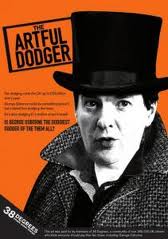
Today was also the day that the 38 Degrees Campaign ran its rather irreverent ‘Artful Dodger’ ads in some of the national newspapers – The Guardian, The Independent and the i. Allegedly, The Daily Mail, The Daily Telegraph and The Metro (part of the same group as the Mail) pulled the ads, or put their prices up. That is their right and their call, both the Daily Mail and The Daily Telegraph have shown their hands in recent times, so we all know where their allegiances lie. But we have a free press and for that we should be thankful.

This is the rather dodgy ad run by the 38 Degrees Team

However, one issue or number that I am totally perplexed about is the quoted £150 billion per annum which tax avoidance, tax dodging or working within the tax laws depending on how you view these things is supposed to cost the UK Exchequer. £150 billion – ie just shy of the deficit we are all being told must be chased down with extreme vigour and haste.  This is a serious amount of money and I for one would like know where this figure comes from – does anyone know or is it an urban myth? Have Vodaphone avoided, legitimately or otherwise, paying UK taxes to the tune of £6 billion last year? We need some facts, please.

This whole issue of tax and tax avoidance, indeed use of individuals’ or companies’ earnings to put against their tax allowances is relevant in the computer and video games industry, given our disappointment when the much campaigned for production tax credits. The Film Council has used the tax breaks system and National Lottery funding to part fund many films on the basis of cultural relevance. The net result of all these systems to offset tax against production of creative industrial output is that we have a pretty healthy film industry. Only today I watched ‘Tamara Drewe’ and ‘Another Year’, two very British films that would never get made in Hollywood, or if they did, would be dramatically altered in their final delivery. Last week I watched ‘Made in Dagenham’ and ‘The King’s Speech’ and the same observation could be made. These films define our culture both in an historical context as well as a contemporary one. They also earn the UK money, provide key jobs, and get us noticed in an ever competitive world. In short they feel like a good thing.

A quick look at the UK Film Council’s website tells quite a lot, namely:-

  • The core UK film industry now contributes approximately £4.3 billion per year to the UK economy – up by 50% since 2000, when the UK Film Council was created;
  • In 2009 UK films took 7% of the global box office and 17% of the UK box office; Independent UK films took an 8.2% share of the UK box office, the highest figure of the last decade;
  • UK film grossed $2 billion at the worldwide box office last year;
  • UK box-office takings are at record-breaking levels, worth £944 million in the UK in 2009, up 62% from 2000;
  • The overall territory box office gross for the UK and the Republic of Ireland exceeded £1 billion for the first time in 2009;
  • UK Film Council investments in British films have been hugely successful – for every £1 we have invested, £5 has been generated at the box office;
  • Over 173.5 million people went to the cinema in the UK in 2009 – up 31 million from 2000, the highest since 2002 and the second highest since 1971;
  • The UK has more digital cinemas than any other European country – 365 and counting;
  • Overall UK audiences had a far greater choice of films in 2009 – 503 films were released, 31% more than a decade ago;
  • The UK film industry directly provides jobs for almost 44,000 people, with extended employment impact of 95,000 jobs;
  • The film industry earns over £1.3 billion in export income from film rights and film production services;
  • In 2009 alone, British films and talent scooped 36 awards. 

Impressive stuff. Now, what if we could convert some of that ‘tax avoidance’ into ‘incentives to back creativity and innovation’ to produce a win win for the tax payer/avoider and the creative industries? Rather than blaming the bourgeoise or the benefit classes in some outdated class war, if we really are all in this together, let’s get creative and encourage big earners to contribute to things that can earn the UK vital export Dollars, Euros and whatever China uses as currency. After all, I actually think we could do with some culturally British computer and video games, rather than every game that is based on earth being impregnated with American or Japanese cultural reference points.

More on this in the coming weeks.

Leave a comment

Filed under World Cup 2010

#oneaday 2: Time Bandits

So I have signed up to the #oneaday project, thus meaning that I will have a monkey on my back forcing me to write a  blog post each and every day in 2011. Already I am late. Late to sign up (late on the evening of New Year’s Day) and only got my first posting in today, which ended up being a rambling mess yet again focused on the woes of our national sport, Association Football or soccer, depending on how you refer to it.

So this is post #2 of 2011 and I thought I would give some context to my love of computer and video games, or more specifically for the industry that is computer and video games, now broadening into interactive entertainment and beyond. I onne of my day jobs, I work with some very talented people ( I work with talented people in all my jobs, ahem) who are responsible for running the UK, or sometimes a bigger clutch of  ‘territories’,  of many of the world’s finest computer and video games companies. I have worked within this group on a purely voluntary basis without any sort of financial reward  for 10 years now  and I must say I have loved every single day of it. I reckon I put in a day or two a week for this organisation and cause, so it adds up to about 500 days work thus far. That feels like a lot, yet does not really seem to add up. I mean 500 days??? What did we do and where did the time go?

In short, this job revolves around a good deal of politics, dealing with politicians and those who serve them. Trying to define this task I would say it is sort of   ‘dealing with industry needs within a political context and ensuring proper representation and understanding of what we do amongst those who are chosen to govern us’. Snappy eh? Even the definition is clumsy and rambling, which kind of gives you a clue as to the monumental task we all face. Basically, the computer and video games industry makes games (and more) that millions of UK citizens, buy, borrow, rent (legally or otherwise)  and above all enjoy. But just like other creative industries before us, such as film, TV and recorded music, we just don’t get taken that seriously. Time and time again we are seen to be facile  by the media and government alike. We have been and to some extent, still are, a great British success story. We combine art and science in a pretty unique way and welcome scholars of English, design, graphics, music, physics and mathematics equally. In a ever more globalised and competitive market place, our elected leaders are flapping around wondering what Britain (or the UK depending on what moniker you prefer) will do for a  living as we head into a new decade.

Fascination with financial services seemed to have infected and  influenced policy in the last 20 years, indeed much of our best mathematical and scientific talent were recruited by the investment banking industry to the detriment of our engineering, software, technical and creative industries. The whole rotten game proved to have a fatal bug a couple of years back, and there was much talk of diversification spouted by the poiticians of all colours and ideologies. Indeed the investment banking industry bore a quirky little sideline in the noughties, one which many of us never really understood. Hedge funds. I remember thinking that these companies seemed to relish and profit from failure. Failure of other companies, currencies, commodities and in some cases nation states. Indeed some of us would question if  this industry was creative at all or simply destructive. It felt like the global financial crisis of 2008 was the wake up call for the capitalist world. At last those that governed started to talk about the creative industries with some passion.

But the allure of the filthy lucre seems to have prevailed yet again. Just as the endemic and short term greed present within some parts of the financial services industry, was outed, we seemeed to have lurched back into that dark, smelly place. Arts funding is slashed, tax breaks for the video games industry were withdrawn without a shot being fired either way and now we have to start all over again and figure out how and if the UK is a good place to make interactive entertainmen, after all it seems to be a place that loves to consume it.

Sometimes you forget the treacle. It is sweet , dark, uber rich and above all prevents you moving very  fast anywhere. No wonder that this treacle can kill. It killed at least 500 days of my life and counting.

Leave a comment

Filed under Premier League

#oneaday 1: The decline of auotcracy, in the national interest…?

 Given the generally depressed outlook all the way back in dark old days of 2010, I would like to think that 2011 would be a year where things started to get a little bit  better? On a personal front 2010 was as good as any year, but as a West Ham and England supporter it was absolutely dire. Mind you, if you are a Chelsea or a Liverpool supporter, it has also been pretty dire and in Chelsea’s case this is a major change in fortunes twelve months on.  A bright start to the year for the England national team soon faded and hopes of glory ended in a seedy and bloated fashion in South Africa.  Money it seems, can’t buy you love, or indeed sustained success and certainly not the right to host a World Cup.   However, behind the easy headlines though perhaps we are getting a glimpse of a different and possibly a better way of getting collective success. 

2011 saw the slow but significant decline of the’ autocracy’. Gordon Brown, a famed autocrat, led the way in politics by losing an election, all be it narrowly, to a couple of jolly decent chaps who days before were at each other’s throats but seemingly had no choice but to bury their hatchets and work together ‘in the national interest’. We hailed the ‘New Politics’ and even the most cynical of commentators have had to admit that coalition politics is a reality which will be with us for some time, who knows may be for the next 4 1/2 years. We have already seen the compromises and ‘breaking of promises’, but that surely is a sign that change is upon us and one party ideology over another is surely too 20th century. In any case, good or bad it is a change and change can be as a good as a rest.

Moving sideways into sport and specifically football, we have seen the cracks appearing at the top, namely at Liverpool, Chelsea and to some extent at Manchester United. The debacle at Anfield has been a long time coming, but it has torn a once invicible and hugely proud club apart at the seams. A couple of ‘no nothing (about football) ‘ Americans – Gillette and Hicks –  basically borrowed unfeasible amounts of cash to buy a ‘business opportunity’ which they could not resist. The rest is history, except that history is still being written – Americans still own the club, all be it different ones, and Roy Hodgson, the critics’ chocie to replace Capello post South Africa, is on the thinest of thin ice, after only 5 months. The fans are calling for control.

Over at Old Trafford, the fans have been vocal ever since Mr Glazer and his sons and/or brothers took over, again leveraging the cash  debt against the assets of the club. Only Alec Ferguson could steady the ship, bringing an errant Rooney to heel and deliver continued success, seemingly. What will happen when Sir Alex eventually decides to press his stopwatch for the last time?  Again the fans are calling for control, via various business consortia.

However, the biggest  surprise has been in the softie South, in West London, the home of millionaires, billionaires and those who govern us. Chelsea. The absolute reign of Roman Abramovic rolls on,  but the cracks are starting to appear and the water is flooding into the ship. The Mighty Roman is almost like a latter day Captain Smith on the bridge of the Titanic. Chelsea, the unsinkable machine, have hit an iceberg and now need to change course, and make repairs fast. Ray Wilkins was sacked and no one knew why. Ancelotti is living by a thread and their players, used to winning, are getting older and their ambition is blunted. The murmurs from the fans have started and if the bad run continues, those whispers become taunts, which become boos, which become protest and leads to a boycott. The Roman is under pressure and you have to wonder how he will deal with it, given his meteoric rise to fortune and lack of experience in the ‘old’ country. I personally think that he will simply fire and forget, but time will be my judge, and those Chelsea fans may well be demanding control before 2011 is too much older.

So these autocratic club owners may be facing up to the reality of managing people, highly paid ones, who just don’t follow the script. Who knows if there will be more fan democracy at play in 2011, I personally hope so, but what other country allows their prize business assets to be sold to anyone who raises the money? After all, this was the year that Cadbury’s was sold to Kraft and promises made pre-sale, were soon broken once the paperwork had gone through. We operate in a free market, and it allegedly produces the best ‘product’, the dear old Premier League is the best in the world, we are told,  but in the national interest? From the England football team’s perspective, that will never happen.

Meanwhile over in Geneva, one autocratic organisation that is totally self interested and is not showing any signs of changing  soon has announced that they are setting up an anti corruption committee.  FIFA and corruption are words that seem to travel all over the world together on expenses. Let’s see how this one develops in 2011.

Leave a comment

Filed under Premier League

World Cup 2018 – is the grass greener at home?

As we await the results of England’s bid to host the 2018 FIFA World Cup this Thursday (2nd December), much has been said and written about our chances by our media. Seemingly the joint bid of Spain (had the World Cup in 1982) and Portugal (never hosted a World Cup) are front runners, with England and Russia (never hosted a World Cup) neck and neck in 2nd place. Joint bidders Holland and Belgium, neither of who have staged a World Cup either, trail in 4th place.

The hands of FIFA, Sepp Blatter and Jack Warner are all weaving their intrigue in those shadowy places none of us know about. Twenty two people will vote and twenty two people will ultimately decide the location for the next 2 World Cups this week. The aforementioned Jack Warner has blamed the ‘British media’ for scotching our bid. He refers of course to The Sunday Times who have exposed 2 FIFA delegates of corruption, both of which have now been stood down, and the yet to be seen BBC Panorama programme that runs tonight. Instead of FIFA thanking The Sunday Times for exposing these two corrupt clowns, FIFA and Warner specifically criticise our media. The question has been asked as to why Panorama does not wait until the vote and air their documentary next Monday. Surely, the question is should it make any difference? If FIFA, Warner and Blatter want to punish England for the British media questioning their ethics (note FIFA have their own ‘Ethics Committee’, which is sort of ironic really), then that is down to FIFA. When the Panorama expose is run is immaterial. Surely it is better for England and ultimately FIFA if the decision is made with all the facts on the table? Should we really blame the BBC and Sunday Times for being unpatriotic? Is it unpatriotic to tell the truth?

FIFA have often spoken about their legacies and what they do for the world game. Indeed, much was made of the investment made by South Africa running up to this summer’s World Cup and the relationship of that investment versus the profit FIFA made. The stories of small traders and hoteliers losing out to the FIFA regulations and business models are legendary, and the issues surrounding potentially empty and unused stadia in Port Elizabeth and Cape Town are also there for everyone to see. FIFA has no ultimate governing body, namely to be very clear it answers to no one but itself. Autocracy is never a great thing and that is precisely what FIFA is.

If England miss out, which looks to be likely, then it will be 2026 before we can be in the frame again. If it is meant to be, it will be. At the end of the day, the rest of the world, both fans and supporters would like to come to England and our own people would embrace the whole thing like few others can. Football is our national sporting obsession. Spain and Portugal would be worthy hosts, as would Belgium and Holland. Even good old Russia would probably do a decent job, although security issues may be a concern, but having overcome real fears for fan safety in South Africa, anything is possible. Personally I really don’t care either way. If FIFA can’t face the truth and their 22 delegates feel Britain (sic) is against them, well that is their right. But please let’s not blame the media this time around, for once they have behaved ethically responsibly.

Outside of a guaranteed place at the 2018 World Cup and possible home advantage, I would not be too fussed if we had to face another away trip to deal with. Euro 96 was great, but never the same at home as it is away, regardless of results.

Leave a comment

Filed under World Cup 2010

Motivation is what you need….

As a long suffering Hammer, one who actually parts with the thick end of two grand a season for the right for two of us to witness the best and worst of the Premier League, I get an email every Monday from West Ham. The wonders of the internet eh?

This is what arrived in my inbox today, and from the words, it really does not look like a ghost written piece on behalf of Avram….have a read and you may agree that Avram’s hand is here.

Dear Andrew

Once again I must hail your fantastic support at our away fixture against Arsenal at the weekend. Many things were very positive at Arsenal. The fighting spirit was good and the players can be proud of the way they played against a very good team.

No one is happy with our position, but at this stage of the season, one win can make the picture look so much different. We are only in November and we know we can do it with the matches we have coming up.

Click here to buy tickets for West Bromwich

Click here to buy tickets for Blackpool and Wigan

We have a long way to go. We will pick out the many positives, work hard in training this week and I know we will take points. We had a tough game in midweek but we deserved to win and even though some players played extra time and some were just coming back from injury, they kept going.

I am pleased with their effort. It was just unfortunate there was no time to respond. We tried but from their point of view they scored in the perfect moment. Arsenal are a very good team but we did a very good job tactically.

The difference between us winning games is very small thing. We are doing all the right things. The next couple of months are very important for us and I am encouraged by the performances. It would be different if we were not playing well.

I have watched Arsenal in many games and I think they created fewer chances than usual in this game. We have defended well and to lose in the last minute it is very disappointing.

After a game against a very good team, we can take a lot of positive things from this match and also the Carling Cup win last week against Stoke City. We are not in a situation that we cannot change. We will win games, we deserve to win games and we will try to do that at Birmingham next Saturday.

We are in a good situation in terms of our performances and I really believe we can do it. We have fighting spirit. It was a heroic performance on Saturday and it bodes well for the future.

Thanks again for your support,

Avram Grant


Leave a comment

Filed under Premier League, World Cup 2010